
Lawn Care and Landscaping Services Near Me (Best USA Options)
The complete guide to finding the best lawn care and landscaping services near you. Real pricing, service breakdowns, and expert advice for homeowners and businesses across the United States.
Lawn Care and Landscaping Services Near Me (Best USA Options)
Searching for lawn care and landscaping services near me usually means one thing — you need help, and you need it now. Maybe your grass has turned brown despite your best efforts. Maybe weeds have taken over the flower beds you spent hundreds on last spring. Or maybe you just bought a property and the yard looks like nobody has touched it in years.
Whatever brought you here, you're not alone. Millions of American homeowners and property managers face the same frustration every year. They try the DIY route, spend weekends pulling weeds and pushing a mower in the heat, and still end up with a yard that looks mediocre at best.
This guide walks you through everything you need to know about finding, evaluating, and hiring the right landscaping professionals in your area. You'll learn what services are actually worth paying for, what they cost, and how to avoid the companies that overpromise and underdeliver.
Quick takeaway: The best landscaping companies near you aren't always the ones ranking first on Google. They're the ones with proper licensing, real reviews, and the expertise to handle your specific property type and climate zone.
Why Homeowners Search for Lawn Care and Landscaping Services Near Me
Common Lawn and Landscape Problems
Most people don't start looking for a landscaper until something goes wrong. The grass dies in patches. The sprinkler system leaks and floods the side yard. Tree branches hang dangerously close to the roof. The HOA sends a violation notice because the front yard doesn't meet community standards.
These problems share a common thread — they get worse the longer you wait. A small brown patch can spread across your entire lawn in weeks if it's a fungal issue. A leaking irrigation line can waste thousands of gallons of water and drive up your utility bill. A dead tree branch can fall on your car, your fence, or worse.
Beyond emergency situations, there's the simple reality that maintaining a good-looking yard takes consistent effort. Lawn mowing alone, done properly with edging and blowing, eats up 2–3 hours every weekend during peak season. Add fertilization schedules, weed control, shrub trimming, seasonal cleanup, and you're looking at a part-time job most busy homeowners simply don't have time for.
Benefits of Hiring Local Professionals
When you hire local landscaping companies, you get more than just labor. You get people who understand your specific growing conditions. A landscaper working in Phoenix knows drought-tolerant plants and irrigation efficiency inside and out. A team in Minnesota understands snow damage prevention and cool-season grass management.
Local companies also respond faster when problems arise. If a storm knocks down a tree on your property at 7 AM, a local crew can often be there by noon. An out-of-area contractor might not even return your call for two days.
There's also an accountability factor. Local businesses rely on their reputation in the community. They can't afford to burn bridges because their next customer might be your neighbor, your coworker, or someone at your church.
Why Professional Landscaping Is Worth the Investment
Think about what your time is worth. If you earn $40 an hour at your job and spend 4 hours every weekend on yard work during a 30-week growing season, that's $4,800 worth of your time — and that's before you factor in equipment costs, fuel, fertilizer, and the learning curve.
Professional landscapers come with commercial-grade equipment, trained crews, and established processes that get the job done faster and better. They also catch problems early — a trained eye spots disease, pest damage, and irrigation issues before they become expensive disasters.
Then there's curb appeal. Whether you're planning to sell or just want to take pride in your home, a well-maintained landscape makes a powerful first impression. Homes with professional landscaping sell for 5–15% more than comparable properties with neglected yards.
What Services Are Included in Lawn Care and Landscaping?
This is where a lot of confusion happens. People use "lawn care" and "landscaping" interchangeably, but they're different things. Understanding the distinction helps you hire the right company for your needs.
Lawn Mowing and Routine Maintenance
Lawn mowing is the most basic and most commonly requested service. But professional mowing goes beyond just cutting grass. It includes proper mowing height based on grass type, crisp edging along sidewalks and driveways, string trimming around obstacles, and blowing clippings off all hard surfaces.
Mowing frequency depends on your region and season. In the Southeast during summer, weekly mowing is standard. In the Southwest with Bermuda grass, you might need it every 5–6 days during peak growth. In northern states, the season typically runs April through October with biweekly mowing during slower growth periods.
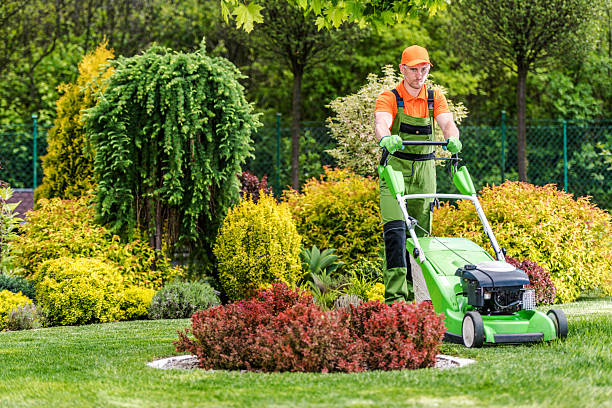
Professional-grade mowing equipment delivers a cleaner cut and faster results than homeowner models
Fertilization and Weed Control
Fertilization feeds your lawn the nutrients it needs for healthy growth. Weed control prevents and eliminates unwanted plants that compete with your grass for water, sunlight, and soil nutrients. Together, these two services form the backbone of any serious lawn care program.
Most professional companies offer 4–8 application programs tailored to your region and grass type. Spring applications focus on pre-emergent weed control and nitrogen for green-up. Summer treatments shift to slow-release fertilizers and broadleaf weed control. Fall applications strengthen root systems for winter survival.
The key advantage of professional fertilization over big-box store products is precision. A licensed applicator knows exactly what your lawn needs based on soil conditions, grass variety, and current health — not just what the bag label says.
Sod Installation and Lawn Renovation
Sometimes your lawn needs more than maintenance — it needs a fresh start. Sod installation gives you an instant, mature lawn that roots within 2–3 weeks. It's the go-to solution for new construction, severely damaged lawns, or properties where the existing grass type is wrong for the climate.
Lawn renovation might include aeration, overseeding, topdressing with compost, or complete removal and replacement. The right approach depends on your lawn's condition, your budget, and your timeline. A reputable landscaping company will assess your yard and recommend the most cost-effective path forward rather than pushing the most expensive option.
Landscape Design Services
Landscape design is where creativity meets practicality. A good designer evaluates your property's conditions — sun and shade patterns, soil type, drainage, existing structures — and creates a plan that balances aesthetics with function.
Services range from simple planting plans to full 3D renderings that show you exactly how your yard will look after installation. The design phase is where you make critical decisions about plant selection, hardscape materials, outdoor living areas, and how different zones of your yard connect.
Investing in professional design upfront prevents costly mistakes later. Planting a shade-loving shrub in full sun, or installing a patio that floods every time it rains — these are expensive problems that proper planning avoids entirely.
Tree Trimming and Shrub Care
Trees and shrubs add structure, shade, and privacy to your landscape — but only if they're properly maintained. Tree trimming removes dead, diseased, or dangerous branches. Structural pruning shapes young trees for healthy growth. Crown thinning reduces wind resistance and lets light filter through to the lawn below.
Shrub care includes shaping hedges, removing dead wood, and controlling growth that blocks windows, walkways, or signage. For commercial properties, well-maintained shrubs signal professionalism and attention to detail.
Tree removal is sometimes necessary when a tree is dead, diseased beyond recovery, or poses a safety hazard. This is absolutely not a DIY project — falling trees can damage homes, vehicles, and power lines, and improper removal can injure or kill people. For an in-depth look at professional tree care in a real market, check out this guide on tree trimming services in St. Petersburg, FL.
Mulching and Flower Bed Maintenance
Mulching is one of the highest-impact, lowest-cost services you can invest in. A fresh layer of mulch suppresses weeds, retains soil moisture, regulates root temperature, and gives planting beds a clean, polished appearance. Most landscapers recommend 2–3 inches of mulch, replenished annually.
Flower bed maintenance goes beyond mulch. It includes weeding, deadheading spent blooms, dividing overcrowded perennials, seasonal planting rotations, and soil amendment. Well-maintained beds provide year-round color and interest that elevate your entire property.
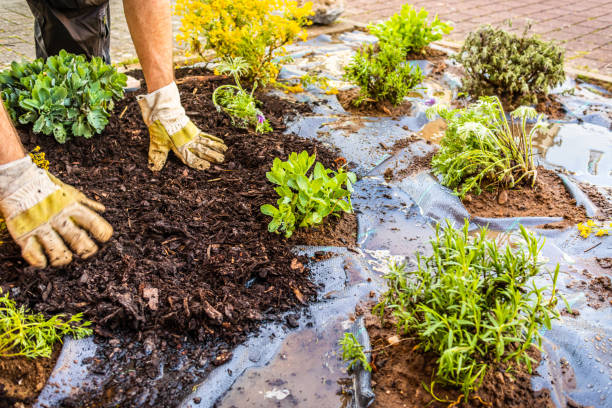
Proper mulch application at 2–3 inches depth suppresses weeds and retains soil moisture for healthier plants
Irrigation and Sprinkler Systems
A properly designed and maintained irrigation system is the difference between a thriving landscape and a constant struggle. Modern systems use zone-based watering that delivers the right amount of water to each area based on plant type, sun exposure, and soil conditions.
Smart controllers adjust schedules based on real-time weather data, reducing water waste by 20–40% compared to traditional timer-based systems. Drip irrigation delivers water directly to plant roots, which is far more efficient than spraying water into the air where much of it evaporates.
Irrigation services include new system installation, seasonal activation and winterization, leak detection and repair, head adjustment and replacement, and smart controller upgrades. A broken sprinkler head can waste up to 25,000 gallons of water over a six-month season — more than enough to pay for professional maintenance several times over.
Hardscaping: Patios, Walkways, and Retaining Walls
Hardscaping refers to the non-living elements of your landscape — patios, walkways, driveways, retaining walls, outdoor kitchens, fire pits, and water features. These are typically the most expensive landscaping investments, but they also add the most tangible value to your property.
A well-built patio extends your living space outdoors and can increase your home's usable square footage by 200–500 square feet or more. Walkways improve safety and create a natural flow between different areas of your yard. Retaining walls manage slopes, prevent erosion, and create level areas for planting or entertaining.
The quality of hardscaping installation matters enormously. A poorly laid paver patio will shift, settle, and become uneven within a few years. A properly installed one with correct base preparation, edge restraint, and joint sand will last decades with minimal maintenance.
Seasonal Cleanup and Yard Waste Removal
Every season creates different cleanup challenges. Spring means removing winter debris, dethatching, and preparing beds for new growth. Summer involves managing growth and heat stress. Fall brings leaf removal — often the single most labor-intensive task of the year for homeowners with mature trees. Winter may involve snow removal, ice management, and protecting sensitive plants.
Professional cleanup services save you enormous time and physical effort. A crew with the right equipment can clear a quarter-acre yard full of leaves in under an hour — a task that might take a homeowner an entire weekend with a rake and trash bags.
Yard waste removal is often included in cleanup services, but confirm this upfront. Some companies charge extra for hauling, while others include it in the service price. If you're doing multiple large projects like tree removal or bed renovation, negotiating a bundled waste removal fee can save significant money.
How Much Do Lawn Care and Landscaping Services Cost?
Pricing is the number one question homeowners have, and it's also the most frustrating to answer because costs vary enormously based on your location, property size, condition, and the specific services you need. That said, here are realistic national averages based on data from thousands of service requests across the United States.
| Service | Typical Cost Range | National Average | Frequency |
|---|---|---|---|
| Lawn Mowing (1/4 acre) | $30 – $80 | $50 | Weekly/Biweekly |
| Fertilization (per app) | $50 – $120 | $75 | 4–8x per year |
| Weed Control (per app) | $40 – $100 | $65 | 4–6x per year |
| Aeration | $75 – $200 | $130 | 1–2x per year |
| Overseeding | $100 – $300 | $180 | 1x per year (fall) |
| Sod Installation (per 1,000 sq ft) | $1,000 – $2,500 | $1,700 | One-time |
| Tree Trimming (per tree) | $200 – $800 | $400 | As needed |
| Tree Removal (per tree) | $400 – $2,000 | $850 | One-time |
| Mulch Installation (per yard) | $50 – $120 | $75 | 1x per year |
| Irrigation Install (full system) | $2,500 – $6,000 | $4,000 | One-time |
| Patio Installation (200 sq ft) | $3,000 – $10,000 | $6,500 | One-time |
| Full Landscape Design | $500 – $5,000 | $2,000 | One-time |
| Leaf Removal | $100 – $400 | $200 | Seasonal |
Important note on pricing: These are national averages. Costs in major metropolitan areas like New York, San Francisco, and Boston can run 30–60% higher than these figures. Rural areas in the Midwest and South may be 15–25% lower. Always get at least 3 quotes from local companies to establish a realistic baseline for your specific market.
What Affects Your Final Price
Several factors push your actual cost above or below these averages:
- Property size: Most companies price mowing and maintenance per square foot or per quarter-acre increment. Larger properties get slightly better per-square-foot rates but higher total costs.
- Property condition: A yard that's been neglected for two years costs significantly more to restore than one that's been maintained. Overgrown lawns require multiple passes, heavy weed treatment, and often renovation work.
- Accessibility: Steep slopes, narrow side yards, fenced areas with small gates, and properties with lots of obstacles (trees, beds, structures) increase labor time and therefore cost.
- Geographic location: Labor costs, licensing requirements, insurance rates, and material costs all vary by region. Coastal areas and major cities are almost always more expensive.
- Season and timing: Spring is peak demand season, and some companies charge premium rates during April–June. Scheduling in late fall or winter (in warmer climates) can sometimes get you better pricing.
- Service frequency: Committing to a weekly or biweekly contract almost always costs less per visit than one-time service calls. Annual contracts typically offer the best per-visit rate.
Pro tip: When comparing quotes, make sure you're comparing apples to apples. One company might quote $45 for "mowing" while another quotes $65 — but the $65 quote includes edging, blowing, and trimming, while the $45 quote is mow-only. Always ask for a detailed breakdown of what's included.
How to Choose the Right Landscaping Company Near You
The landscaping industry has low barriers to entry, which means your local market is probably flooded with options ranging from excellent professionals to outright scams. Here's how to separate them.
Verify Licensing and Insurance
This is non-negotiable. Any legitimate landscaping company should carry general liability insurance (minimum $1 million) and workers' compensation coverage. If a worker gets hurt on your property and the company doesn't have workers' comp, you could be personally liable. Ask for proof of insurance and verify it's current by calling the insurance agent listed on the certificate.
Check Real Reviews (Not Just the Stars)
Don't just look at the average rating — read the actual reviews. Look for patterns. Do multiple reviews mention the same positive qualities (reliability, communication, quality of work)? Do multiple negative reviews mention the same problems (no-shows, hidden fees, damage to property)? A company with 4.8 stars from 500 reviews is generally more reliable than one with 5.0 stars from 12 reviews.
Ask About Their Crew and Equipment
Who actually does the work? Some companies send experienced crews with commercial equipment. Others subcontract to random laborers with homeowner-grade tools. Ask if the crew that does the estimate will be the same crew doing the work. Ask what equipment they use. A company using commercial zero-turn mowers, professional-grade edgers, and backpack blowers will deliver noticeably better results than one using residential equipment.
Get Everything in Writing
Verbal promises mean nothing. Your quote should detail every service included, the frequency, the price per service and total contract cost, payment terms, cancellation policy, and what happens if weather prevents service. A professional company won't hesitate to put everything in writing — in fact, they'll insist on it to protect both parties.
Start With a Small Job Before Committing
If you're considering a large project or annual contract, start with a single mowing or a one-time cleanup. This lets you evaluate their communication, punctuality, work quality, and professionalism before you're locked into a bigger commitment. The best companies will actually encourage this approach because they're confident you'll be impressed.
Red Flags to Watch For
- No physical address or only a PO box
- Refuses to provide proof of insurance
- Demands full payment upfront before any work begins
- Quotes significantly lower than every other company (too good to be true)
- No written contract or proposal
- Pressures you to decide immediately with "today only" pricing
- Cash-only payments with no receipt
- No online presence or only suspiciously perfect 5-star reviews
Popular Landscaping Styles Across the USA
The "best" landscaping style depends on your climate, your home's architecture, and your personal preferences. Here are the most popular styles and where they work best:
Mediterranean
Works best in: California, Arizona, Nevada, Texas. Features drought-tolerant plants like lavender, rosemary, olive trees, and ornamental grasses. Hardscaping uses natural stone, decomposed granite, and terra cotta. Gravel and decomposed granite replace traditional lawns to conserve water.
Cottage Garden
Works best in: Pacific Northwest, Northeast, Midwest. A relaxed, abundant style with mixed perennials, climbing roses, herbs, and ornamental shrubs. Paths are often informal, using stepping stones or gravel. The look is intentionally slightly wild and romantic rather than manicured.
Modern/Minimalist
Works best in: Urban and suburban areas nationwide. Clean lines, limited plant palette, strong geometric forms. Features architectural plants like ornamental grasses, succulents, and tightly clipped hedges. Hardscaping uses concrete, steel, and large-format pavers. Less is more — every element serves a purpose.
Traditional American
Works best in: Suburbs across all regions. The most common residential style — manicured lawn, foundation plantings with evergreen shrubs, seasonal flower beds, and a clean driveway/walkway. It's popular because it's universally appealing and relatively easy to maintain with professional help.
Native/Naturalistic
Works best in: Rural and suburban properties with larger lots. Uses plants native to your specific region, which means less water, less fertilizer, less maintenance, and better wildlife habitat. Prairie-style plantings are popular in the Midwest, while native woodland gardens work well in the Southeast and Northeast.
DIY vs. Professional: When to Hire and When to Save
Not every landscaping task requires a professional. Here's an honest breakdown of what's worth hiring out and what you can reasonably handle yourself.
Tasks Worth Hiring Out
- Tree removal and major pruning — Dangerous, requires specialized equipment and expertise. Not worth the risk.
- Irrigation installation and repair — Requires knowledge of water pressure, zone planning, pipe fitting, and electrical connections for controllers.
- Hardscaping — Patios, retaining walls, and walkways require proper base preparation, drainage, and structural engineering knowledge.
- Sod installation — Requires proper soil preparation, grading, and timing for successful rooting.
- Large-scale landscape design — Professional designers prevent expensive mistakes and create cohesive plans.
- Chemical applications — Fertilizer and pesticide application requires licensing in most states and proper handling to protect your family, pets, and the environment.
Tasks You Can DIY
- Basic mowing and edging — If you have the time and a decent mower, this is straightforward.
- Planting flowers and small shrubs — Follow planting guidelines for depth, spacing, and watering.
- Mulching — Physically easy, just time-consuming for large areas.
- Light pruning — Removing dead branches, shaping small shrubs, and deadheading flowers.
- Container gardening — Porch pots, window boxes, and patio planters are easy and rewarding.
- Leaf raking and light cleanup — Tedious but not technically difficult.
Seasonal Lawn Care Calendar
Timing matters enormously in lawn care. Here's what professional landscapers focus on during each season across most U.S. climate zones:
Spring (March–May)
- Clean up winter debris and thatch
- Apply pre-emergent weed control (crucial timing — must be done before weeds germinate)
- First fertilization application
- Begin mowing when grass reaches proper height
- Activate irrigation systems in frost-free areas
- Plant new trees, shrubs, and perennials
- Refresh mulch in planting beds
Summer (June–August)
- Consistent mowing at proper height (raise height during heat stress)
- Continue fertilization (slow-release formulas in hot regions)
- Broadleaf weed control
- Monitor for pests, disease, and drought stress
- Deep, infrequent watering preferred over frequent shallow watering
- Prune spring-flowering shrubs after they finish blooming
- Deadhead annuals and perennials for continued blooms
Fall (September–November)
- Core aeration (the most important fall task for most lawns)
- Overseeding thin or damaged areas
- Fall fertilization (critical for root development and winter survival)
- Leaf removal — don't let leaves mat down and smother grass
- Winterize irrigation systems in freeze-prone areas
- Plant spring-blooming bulbs
- Final mowing at lower height to prevent snow mold
Winter (December–February)
- Minimal active lawn care in most regions
- Plan spring projects and get quotes from landscapers (off-season = better availability and pricing)
- Snow and ice management for northern properties
- Protect sensitive plants with burlap or frost cloth in borderline zones
- Sharpen and maintain equipment for spring
- Indoor plant care and planning next year's garden
Frequently Asked Questions
During peak growing season (late spring through summer), weekly mowing is ideal for most grass types. During slower growth periods (early spring, early fall), every 10–14 days may be sufficient. The key rule: never remove more than one-third of the grass blade height in a single mowing. If your grass gets too tall between cuts, raise the mowing height and gradually bring it back down over multiple cuts.
Lawn care focuses specifically on maintaining healthy grass — mowing, fertilizing, weed control, aeration, and overseeding. Landscaping is a broader term that includes lawn care plus design, installation, hardscaping, tree work, irrigation, and overall property management. Many companies offer both, but some specialize in one or the other.
For a typical suburban yard (quarter to half acre), expect to spend $10,000–$50,000 for a comprehensive makeover that includes design, new plantings, hardscaping (patio or walkway), irrigation improvements, and lawn renovation. High-end makeovers with outdoor kitchens, water features, or extensive stonework can easily exceed $100,000.
Both have pros and cons. Local companies often provide more personalized service, deeper knowledge of local conditions, and more flexibility in pricing. National franchises (like TruGreen, Lawn Doctor) offer standardized processes, nationwide guarantees, and consistent service quality — but may be more expensive and less flexible. For most homeowners, a well-reviewed local company provides the best value.
Ask: Are you licensed and insured? (Get proof.) Can you provide references from recent local projects? What's included in your quoted price? What's your guarantee or warranty policy? Who will be on my property — employees or subcontractors? What happens if I'm not satisfied with the work? What's your cancellation policy? How do you handle damage to existing plants or property?
For most homeowners, yes — if you value your time. The average homeowner spends 70+ hours per year on lawn and landscape maintenance. If your time is worth even $20/hour, that's $1,400+ of your time annually. Professional lawn care typically costs $1,200–$2,500 per year for a standard suburban property, and the results are usually noticeably better because professionals have better equipment, trained crews, and proper product knowledge.
If more than 50% of your lawn is dead, weeds, or bare dirt, renovation (aeration, overseeding, or sod) is probably needed. If the lawn is mostly healthy but has some thin spots, weed issues, or color problems, a proper maintenance program (fertilization, weed control, proper mowing, watering) can usually bring it back within one growing season. A reputable landscaper will give you an honest assessment rather than pushing the most expensive option.
Ready to Find Your Perfect Landscaping Company?
Finding the right lawn care and landscaping service doesn't have to be overwhelming. Start by identifying exactly what you need — not what you think you might need eventually, but what your property actually requires right now. Then get 3–4 quotes from licensed, insured, well-reviewed local companies.
Compare them not just on price, but on communication quality, thoroughness of their assessment, and whether they seem genuinely interested in solving your specific problems versus selling you a package.
The best time to start looking for a landscaper is before you desperately need one. Companies with the best reputations often have waitlists during peak season. Reaching out in late winter or early spring gives you the best selection and often better pricing.